Vibe Coding Is Not Engineering: The QA Gap That's Costing Mid-Market Teams Their Reputation
AI agents can now generate full applications from a prompt. But the gap between a demo and production software is testing, architecture, and discipline. Here's why mid-market teams are getting burned — and how to fix it.
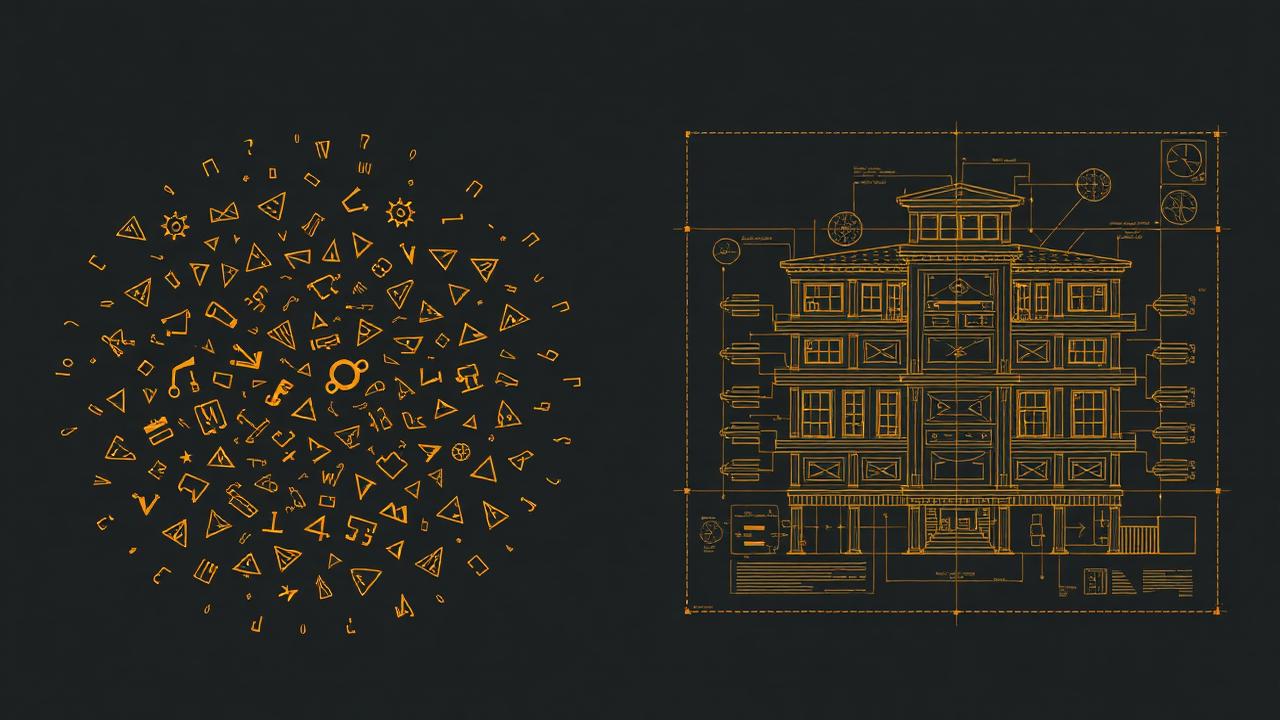
A few months ago, a founder we know shipped a customer portal he'd built entirely with an AI coding agent. It looked great. Forms worked. Payments processed. He demoed it to his board and raised his next round. Three weeks later, a customer discovered that under a specific combination of inputs — a refunded payment, a changed email address, and a weekend timezone — the portal silently duplicated a $14,000 invoice instead of voiding it. No one noticed for six days. The "vibe" was strong. The engineering was not.
This is the story that's not being told loudly enough in 2026. AI coding agents are miraculous. They are also, by design, optimized for the first 80% of building something — the part that looks like progress. The last 20% — the testing, the edge cases, the security boundaries, the data integrity, the operational behavior under failure — is not what these tools optimize for. And in that gap, mid-market teams are quietly accumulating risk that will surface at the worst possible moment. The Specloop spec engine exists, in large part, to close that gap.
What "vibe coding" actually is
The term started as a joke and became a movement. "Vibe coding" means describing what you want in natural language and letting an AI agent generate the code. Adjust the prompt, iterate quickly, ship fast. The aesthetic is playful, exploratory, and deliberately anti-process. The assumption is that speed matters more than structure, and that you can fix problems as they arise.
For a weekend project, a landing page experiment, or an internal dashboard with no customer-facing data, this is a legitimate approach. The problem starts when teams treat vibe coding as a methodology for production software — the kind that processes customer data, handles payments, manages inventory, or runs operational workflows. Because the thing vibe coding optimizes for (speed of initial delivery) is in direct tension with the things production software requires (correctness under all conditions, security, maintainability, observability).
The 80/20 trap: AI coding agents are exceptionally good at the first 80% of building a feature. They are not designed to catch the edge cases, race conditions, security boundaries, and data integrity issues that make up the last 20% — and that last 20% is where production software lives or dies.
What we see when we audit AI-generated codebases
In 2026, a meaningful percentage of our inbound work is not building from scratch — it's auditing and correcting codebases that were built with AI agents and then handed to us when something broke. Here's what we find, consistently:
- Zero test coverage on critical paths — the code that handles payments, user authentication, and data mutations has no automated tests
- No input validation boundaries — forms accept data that should be rejected, with downstream effects that don't surface until they corrupt reports or trigger bugs
- Race conditions in state management — two simultaneous operations on the same record produce inconsistent results because there are no transaction guards
- Hardcoded secrets and credentials — API keys, database passwords, and third-party tokens committed directly to the repository because the agent generated a "working" example
- No error handling for failure modes — when a third-party API is down, a database connection times out, or a file upload fails, the application crashes or silently loses data
- Database schema designed for the demo, not the domain — relationships that work for ten records collapse under real data volume, with no indexing strategy and no migration discipline
None of these are bugs the AI agent made by mistake. They're omissions the AI agent made by design. The agent's goal is to produce something that works for the prompt you gave it. Your goal, if you're building production software, is to produce something that works for every user, in every state, under every failure condition, for the next five years. Those are different jobs, and only one of them is in the prompt.
Why mid-market teams are especially vulnerable
Enterprise teams have QA departments, architecture review boards, and security teams that catch most of this before it ships. Solo developers and tiny startups often have so little at stake that a data bug is embarrassing but not existential. Mid-market teams — the ones with real revenue, real customers, and real operational complexity — are in the danger zone.
They have enough at stake that a production bug costs real money and real reputation. They don't have enough engineering headcount to run a full QA and architecture review on every AI-generated feature. They see the speed AI coding delivers and correctly want it. What they miss is that the speed comes with a tax — the tax of verifying, testing, and hardening everything the agent produced — and most teams aren't paying that tax.
The result is software that looks finished, demos well, and fails in ways that are expensive, public, and hard to explain to customers who trusted you with their data.
| Dimension | Vibe Coding | Engineering Discipline |
|---|---|---|
| Primary goal | Speed to first demo | Correctness under all conditions |
| Testing | Manual click-through | Automated unit, integration, and E2E coverage |
| Error handling | Happy path only | Explicit handling for every failure mode |
| Security | Whatever the agent generated | Audit, boundary review, secret management |
| Data integrity | Works for the sample data | Validates constraints, handles race conditions |
| Maintainability | Next prompt fixes it | Architecture docs, typed interfaces, clean abstractions |
The framework: how to use AI coding without getting burned
We use AI coding agents constantly. They're part of our stack. The difference is that we treat them as a production tool within an engineering discipline — driven by a written specification — not as a replacement for one. Here's the framework Specloop uses on every build:
- Spec before prompt — the full spec (data model, surface area, business rules, edge cases, security boundaries, success criteria) is written before any code is generated. The spec, not the prompt, is the source of truth.
- Agent generates, engineer verifies — every line of AI-generated code is reviewed by a human who understands the domain, the data model, and the failure modes.
- Critical paths get tests first — before any feature ships, we write automated tests for the paths that handle money, identity, and data mutation. The agent can help write them, but a human verifies they cover the edge cases.
- Security audit on every build — API keys, auth boundaries, input validation, and injection risks are checked on every commit, not assumed because the agent "probably handled it."
- Schema before features — the data model is designed deliberately, with constraints, indexes, and migration discipline, before any UI or API code is generated.
- Staging load and failure testing — we simulate high load, dropped connections, and malformed inputs in staging before anything sees production.
- Operational observability from day one — logging, alerting, and tracing are built in from the first deploy, not added later when something breaks.
This is not slower than traditional engineering. With AI assistance against a real spec, we're still shipping in 30 days. But we're shipping something that doesn't surprise us at 2 AM on a Saturday.
What this means for teams evaluating AI build tools
If you're a mid-market leader evaluating AI coding platforms — or evaluating vendors who use them — the right question is not "how fast can you build this?" The right question is "what is your specification, verification, and testing process for code the AI generates?"
Any vendor who can't articulate a clear answer to that question is selling you speed at the cost of risk you haven't priced yet. The ones who can describe their spec process, their review process, and their hardening process are the ones who understand that AI coding is a multiplier, not a replacement, for engineering judgment.
The honest closing
We love AI coding agents. We use them daily. They have made us orders of magnitude more productive. But we have also spent enough time cleaning up the messes they leave behind to know that they are not, by themselves, a methodology for building software that businesses can depend on.
The teams that are going to win the next five years are not the ones who vibe-coded the fastest. They're the ones who wrote the spec first, treated the agent as labor against that spec, and used the speed multiplier to ship more reliable software, not more software. Speed without discipline is just a faster way to break things. The spec is the discipline.
Sources & references
Next step
Want a spec for your build?
We write the full specification before any code is generated, then ship in 30–60 days at one flat rate. You own every line.